Built-In UHD Sonar: ClearVü and SideVü
The GPSMAP 15x3 has Ultra High-Definition ClearVü and SideVü scanning sonar built into the unit — no separate sonar module required for basic sonar capability. ClearVü produces a detailed near-photographic image of bottom structure and targets directly beneath the hull. SideVü extends that coverage laterally, scanning the water column and bottom structure out to either side of the vessel's track.
Both technologies use vivid, high-contrast color palettes that distinguish target separation and bottom definition clearly — important for captains working inshore structure, nearshore reefs, and wrecks where identifying what's on the bottom before you commit to a drift matters.
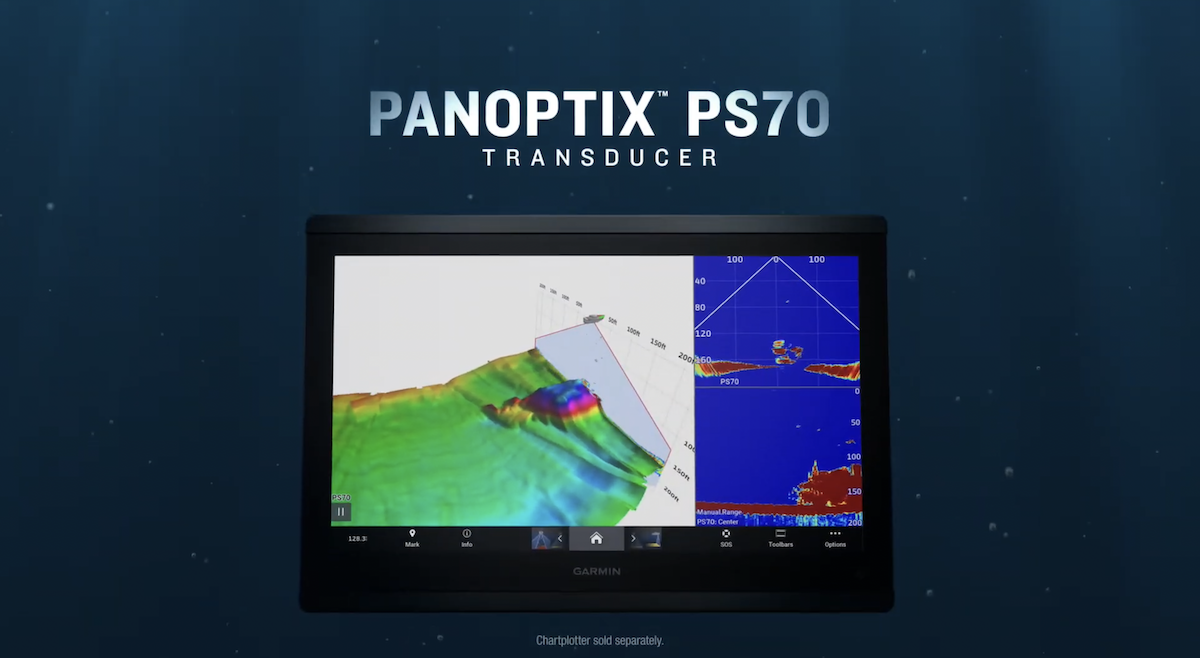
For vessels that need deeper capability, the 15x3 supports optional Panoptix sonar, CHIRP traditional sonar, and additional transducer configurations through the Garmin Marine Network. The built-in UHD sonar covers the majority of inshore and nearshore applications out of the box. Offshore and deep-water sonar requirements are handled through the network.
Learn more about our Garmin sonar installation services →
Garmin Marine Network Integration
The GPSMAP 15x3 connects to the full Garmin Marine Network via Ethernet and NMEA 2000, functioning as a central hub for the vessel's electronics. Radar overlay, autopilot control, AIS vessel traffic, instrument feeds, stereo control, and camera feeds all route through the display.
On a properly configured Garmin helm, the 15x3 communicates with GMR Fantom radar, GHP Reactor autopilot, and sonar modules simultaneously — each data source available as a split-screen view or full-screen application without navigating away from the primary function. AIS integration overlays vessel traffic directly on the chart with MMSI, COG, SOG, and CPA data in real time, which matters offshore in shipping lanes and in tournament fleet conditions where vessel density is high.
For vessels running legacy NMEA 2000 equipment alongside newer Garmin hardware, the 15x3 supports both network standards, making it a viable upgrade on existing helms without requiring a complete electronics replacement.
Learn more about our Garmin chartplotter installation services →
Helm Placement and Installation Considerations
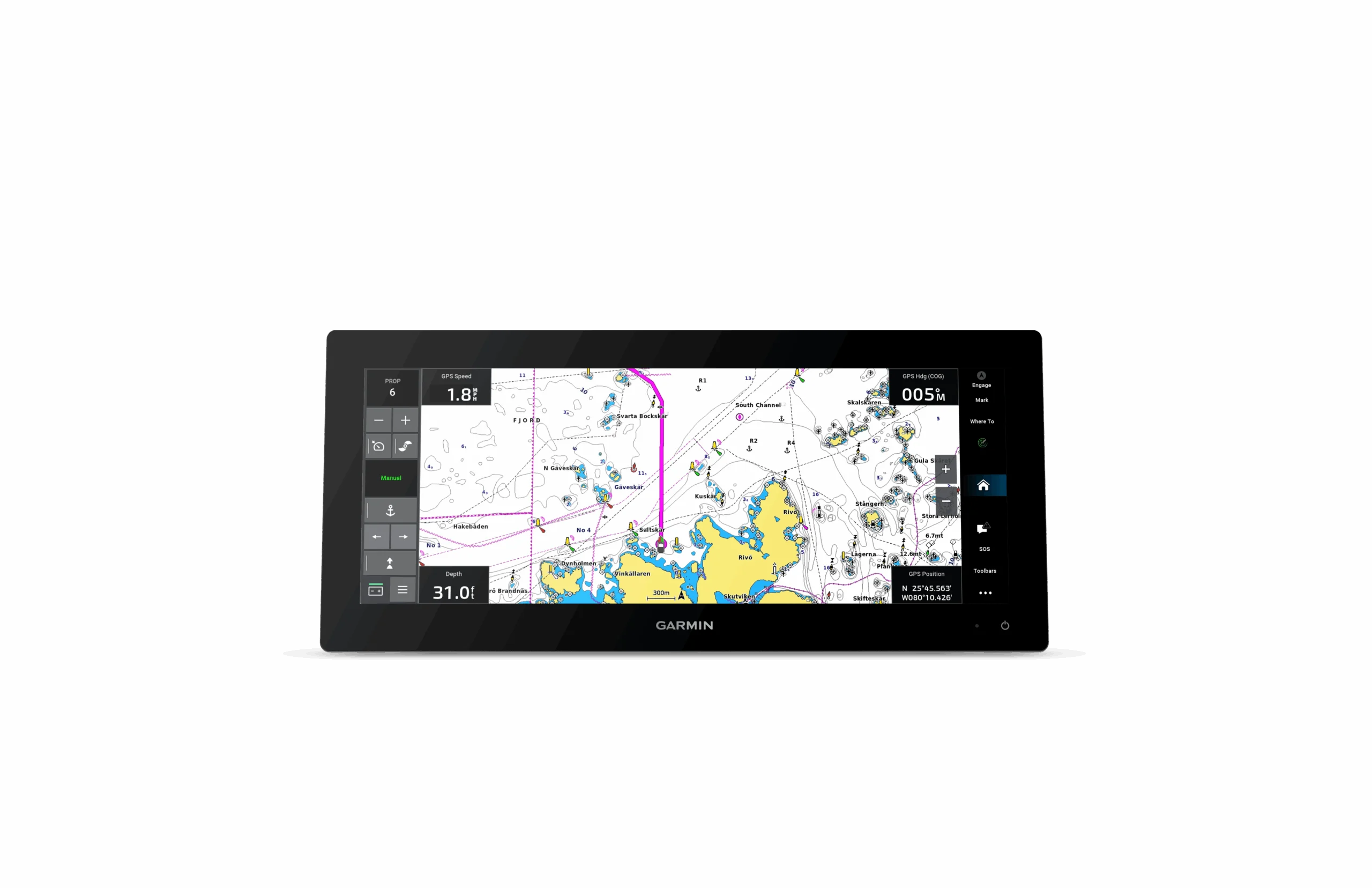
The GPSMAP 15x3's ultrawide footprint requires more horizontal helm real estate than a standard chartplotter. On a flush-mounted installation — the cleanest result from both a functional and aesthetic standpoint — the opening dimensions need to accommodate the unit's width without compromising the structural integrity of the helm panel.
On vessels with existing helm consoles, a 15x3 installation is often paired with a helm panel redesign. We fabricate custom panels that fit the display correctly, maintain clean sight lines from the helm seat, and route cabling out of view. On new builds or major refits, the panel is designed around the display from the start.
Mounting angle and height relative to the helm seat also affect usability. The touchscreen needs to be positioned within comfortable reach without requiring the captain to leave the wheel, and at an angle that minimizes glare from the Florida sun. We assess each vessel's helm geometry before specifying placement.
Network configuration is completed at the dock — radar integration, sonar module pairing, autopilot connection, and instrument network setup — before the boat goes on the water. Every GPSMAP installation we complete includes on-water verification before sign-off.
Learn more about our helm panel design and layout planning →
Is the GPSMAP 15x3 Right for Your Vessel?
The 15x3 is best suited to vessels with helm consoles that can accommodate the ultrawide footprint — typically 40-foot-plus sportfish boats and motor yachts with purpose-built helm stations. On center consoles and smaller vessels where helm space is limited, a dual-display configuration with standard GPSMAP units often makes more sense than a single ultrawide.
For captains running larger sportfish vessels who are considering a helm upgrade or refit, the 15x3 consolidates what would otherwise require two separate displays into a single unit — simplifying the helm layout and reducing the number of separate devices on the network.
If you're evaluating a helm upgrade and want to know whether the 15x3 is the right fit for your vessel, get in touch and we'll walk through the options.
Explore our full Garmin installation services →